

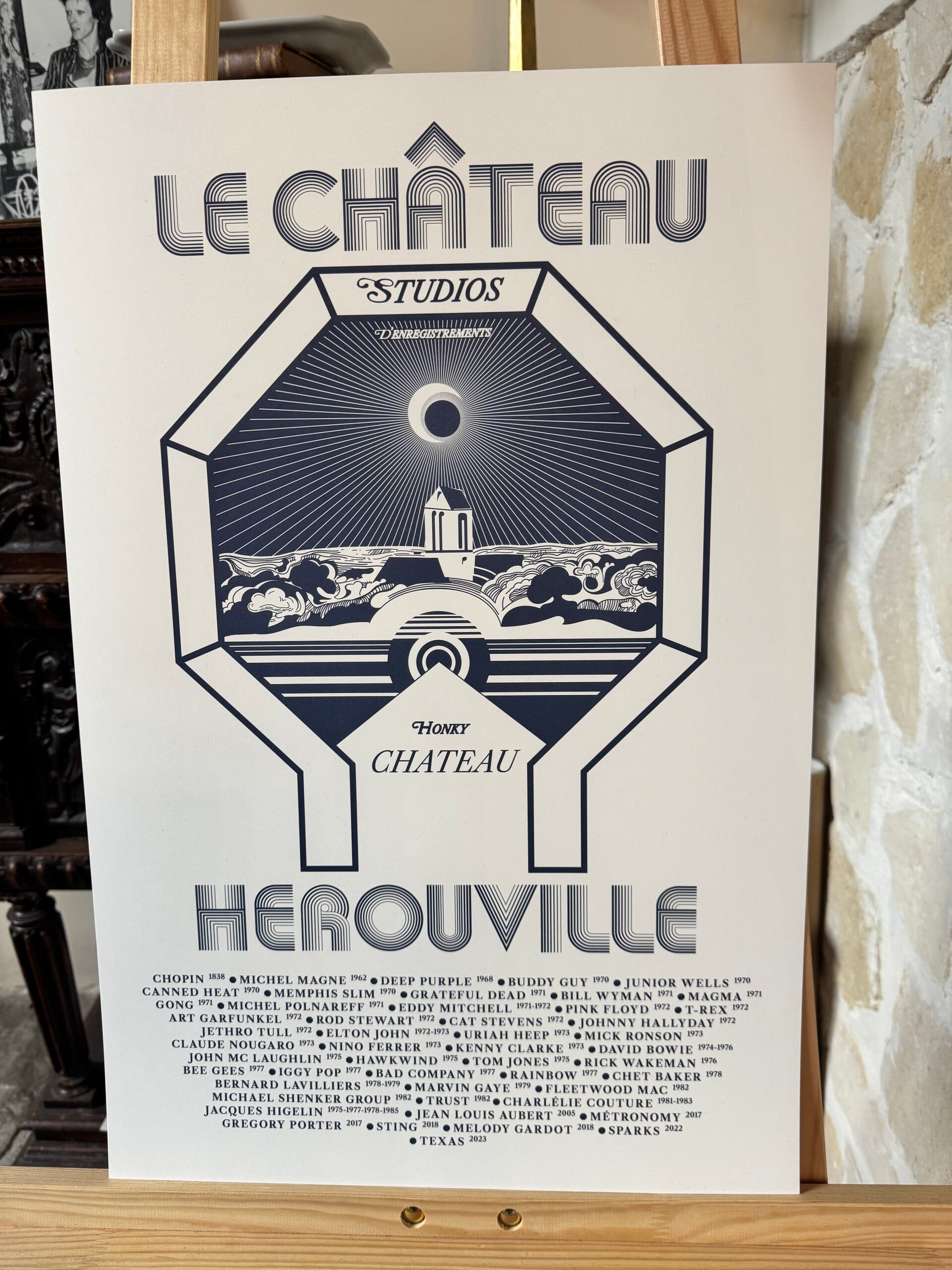
Before setting off with my friends Joop Koning and Hélène IJspelder to Château d’Hérouville, just north of Paris, I had my doubts. As someone who doesn’t drive, I was not exactly looking forward to the long journey, arriving at a nearby Ibis Budget Hotel in the middle of the night, only to get a few hours of sleep before heading straight to the famous château the following morning.
Yet I had wanted to make this trip for years. Although Joop and Hélène were willing to join me, hardly anyone else in my circle was able to make the journey. And while I would much rather have travelled by train, I decided to go anyway. Some opportunities simply do not come around twice. I have become increasingly aware of that in recent years. Having previously missed a chance to meet Carlos Alomar at Hansa Studios in Berlin, I was determined not to make the same mistake again.
This time, there was another reason as well. It had been fifty years since Bowie’s legendary album Low was recorded at the very same château.
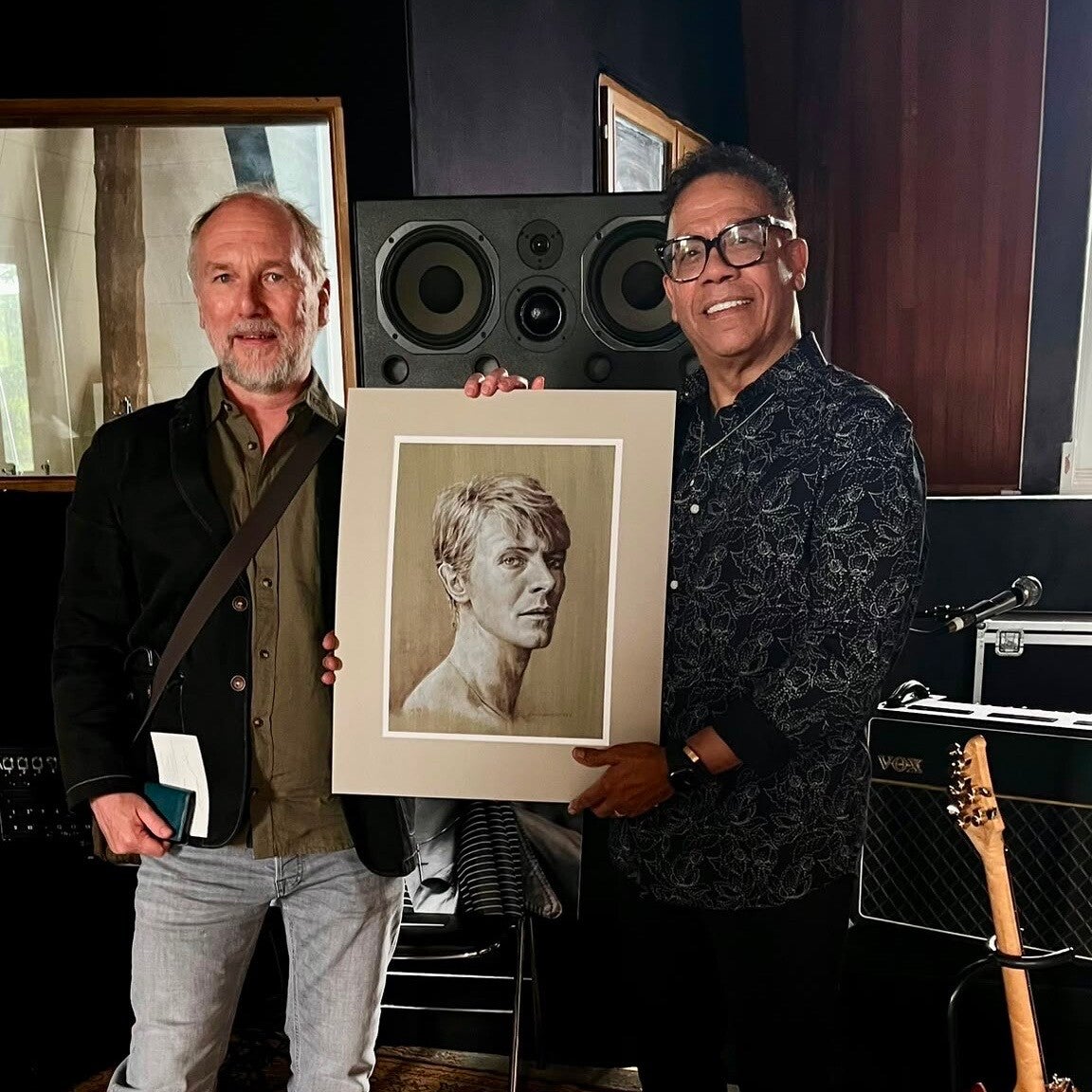
There was also an additional motive. Almost at the last moment, I decided to bring along my remaining Bowie print. Framer Rob Schippers quickly prepared a beautiful mount for it, allowing Carlos to pose with the portrait. That photograph was still missing for my upcoming book, Holding Bowie.
I also made a second decision: I wanted to donate the print to the Château itself. The new owners were genuinely delighted with the gift. In my book, I compare the journey of this portrait to the travelling garden gnome from the French film Le Fabuleux Destin d’Amélie Poulain, which is photographed all over the world. What could be more fitting than for my portrait, after travelling through so many countries, meeting so many people and musicians along the way, to finally return to France? At that moment, it felt as though the circle had finally been completed.
The many encounters, experiences and the chance to see Carlos again made the journey more than worthwhile. But there was something else that captured my attention.
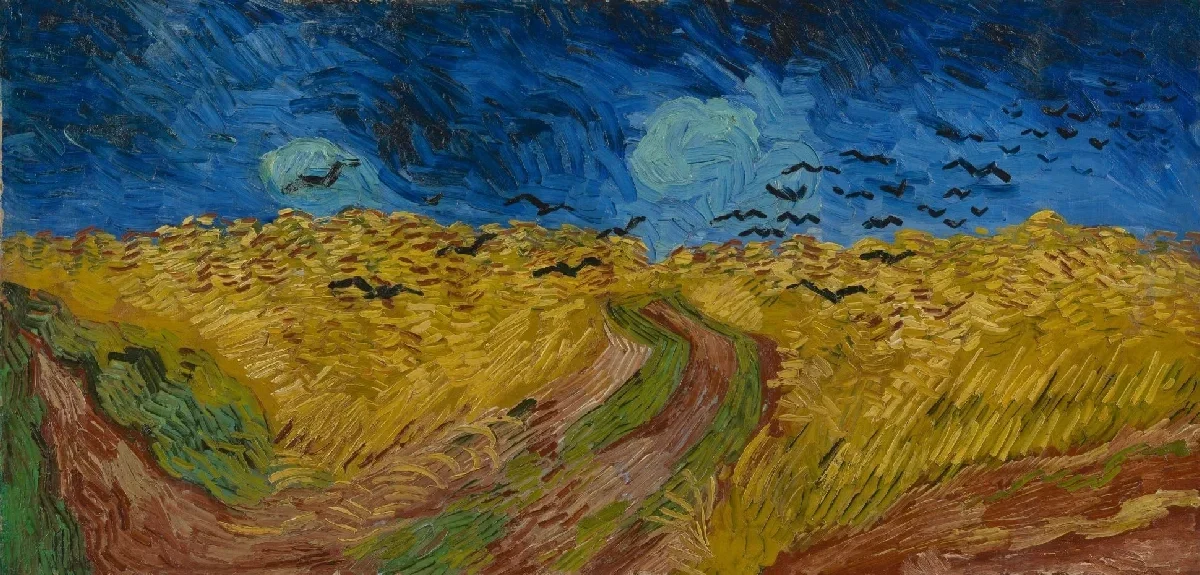
A few days earlier, Carlos had written something about Vincent van Gogh. His words struck a chord with me. He spoke about the sense of urgency he felt in Van Gogh’s work. I immediately understood what he meant. That inner necessity to create. To leave something behind. To make sure your life does not simply pass by unused.
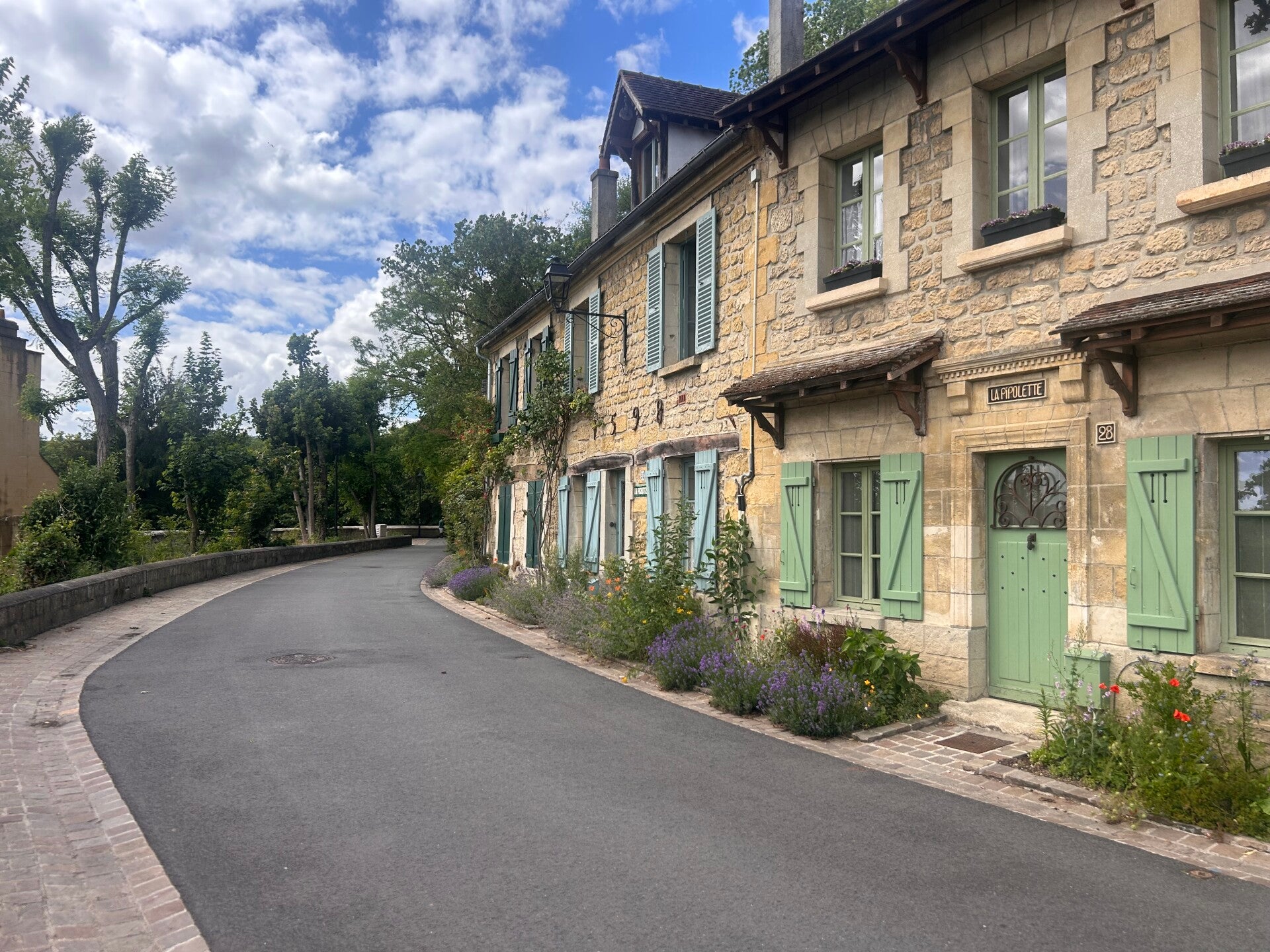
Inspired by Carlos’s Facebook post, Joop, Hélène and I travelled to Auvers-sur-Oise to visit some of the places where Vincent had lived, worked and painted. Naturally, we also visited his final resting place, where he lies buried beside his brother Theo. It was a deeply moving experience.
This afternoon, I continued my own research. Of course, I already knew that Van Gogh had spent the longest period of his life in The Hague, but discovering just how closely my own life has intersected with places connected to him feels almost magical.
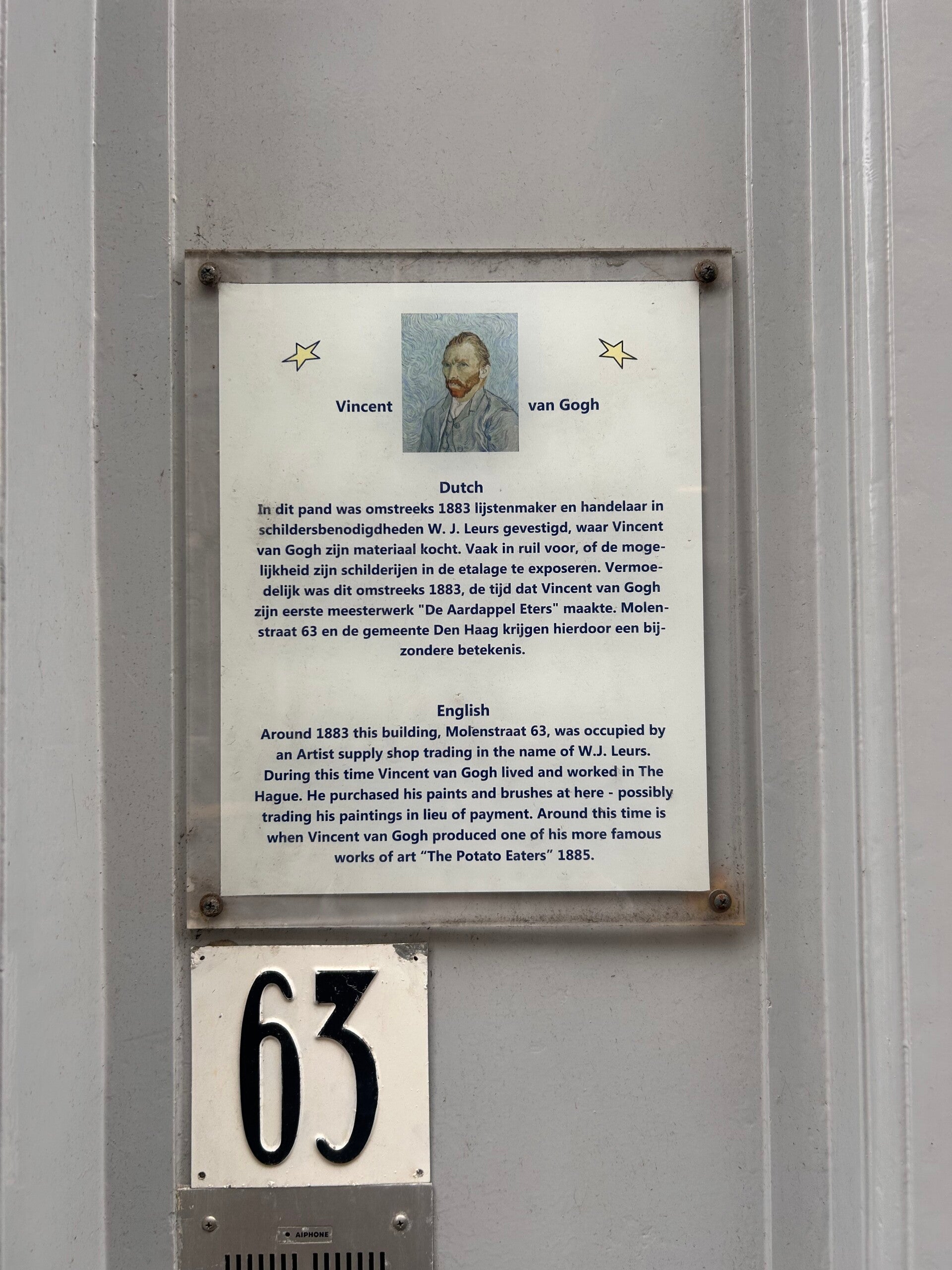
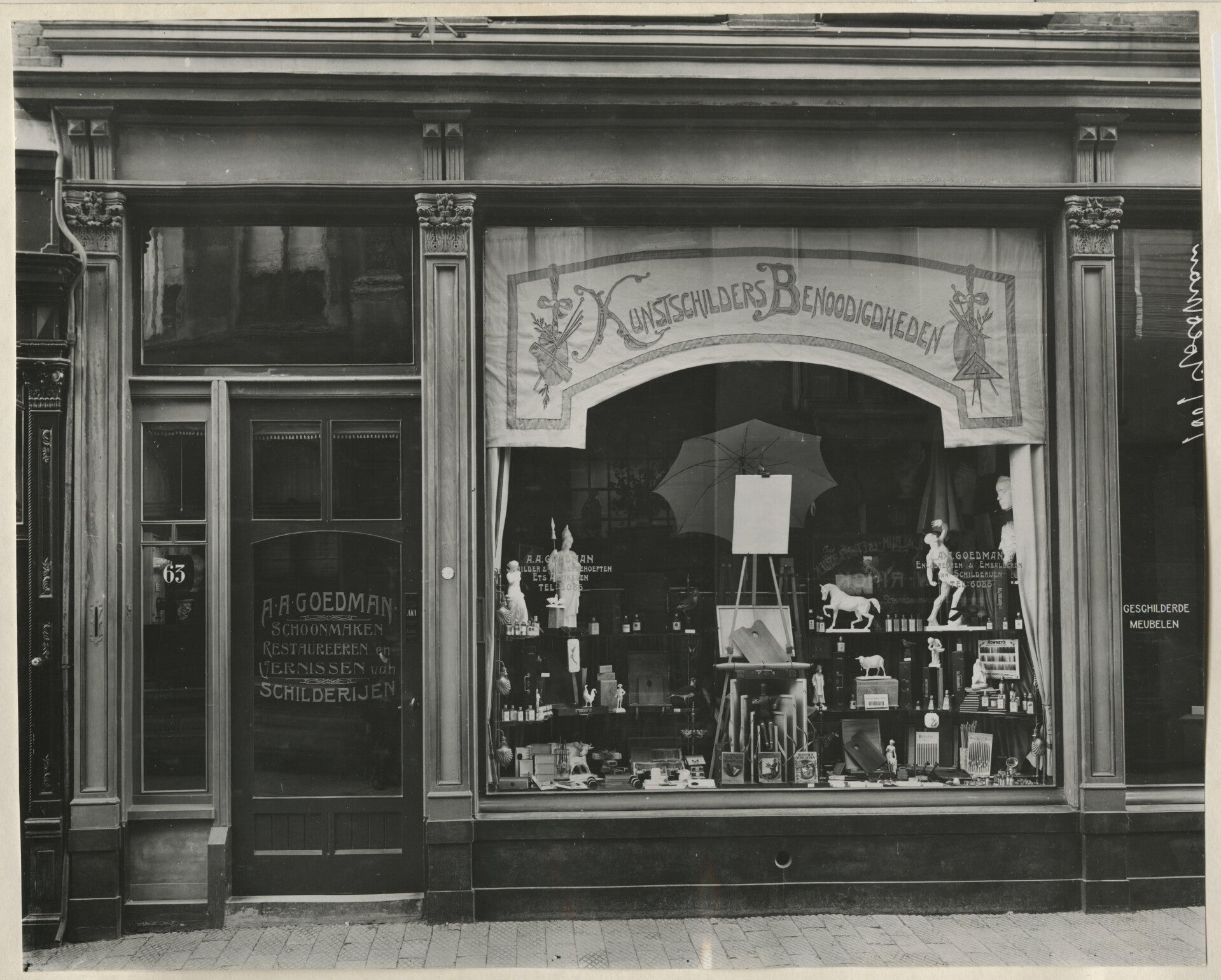
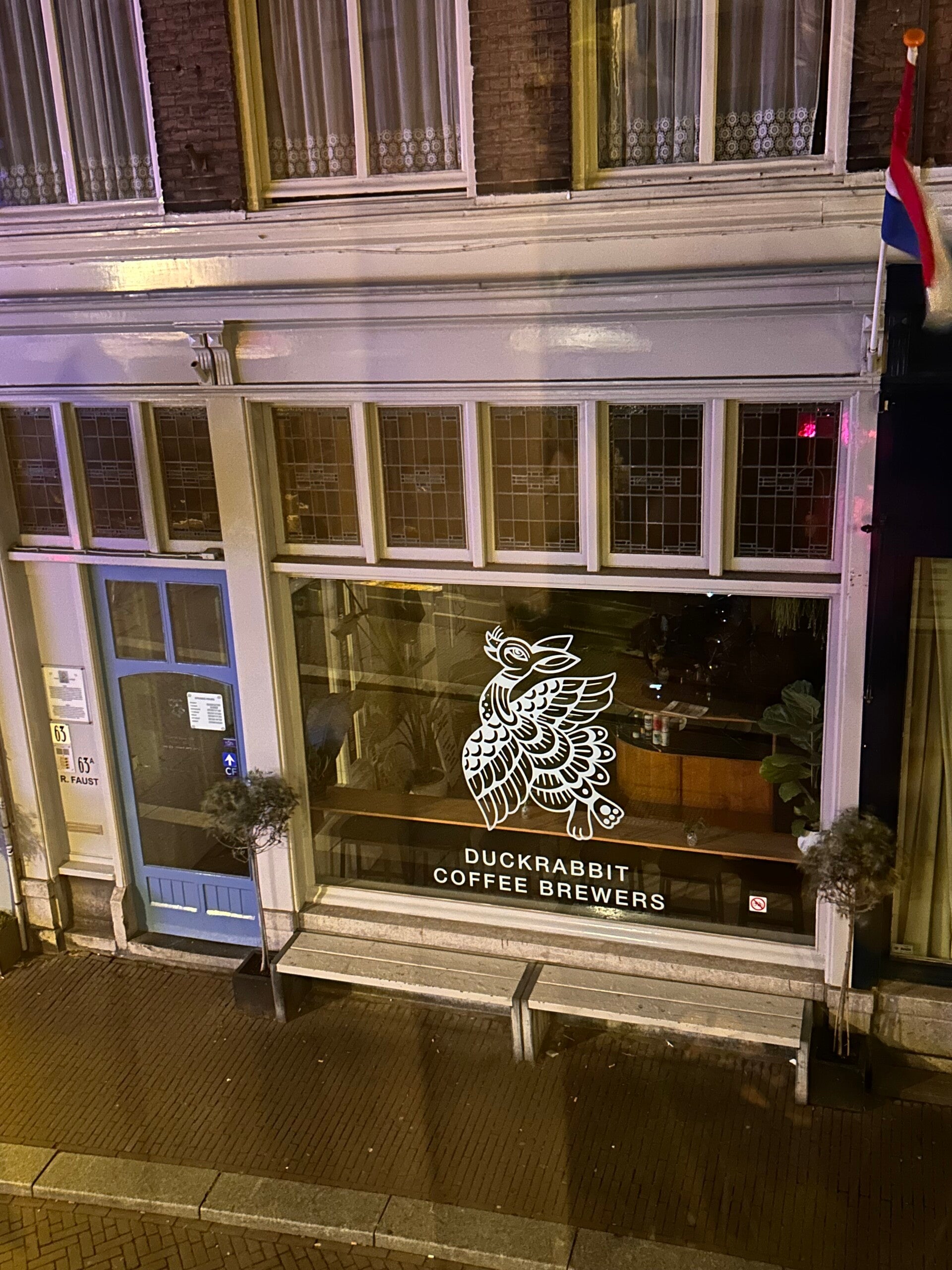
For the past fourteen years I have lived and painted in Molenstraat, in The Hague. Looking out of my window, I see the façade of Duck Rabbit. In the same building there was once an art supplier and later the firm Goedman, where I still buy my paints today. There is a good chance Vincent himself purchased materials there. We know for certain that he visited several addresses in my street.
Within walking distance, he regularly visited his fellow artist George Hendrik Breitner, whose studio was located in Juffrouw Idastraat, the parallel street behind mine.
When I first moved to The Hague, I lived in Lage Nieuwstraat. Only much later did I discover that Van Gogh had once had a studio just around the corner. He also lived for a time near Lange Beestenmarkt, only a stone’s throw from my current art school. And as if that were not enough, he was an associate member of Pulchri Studio, where I too have been a member for many years.
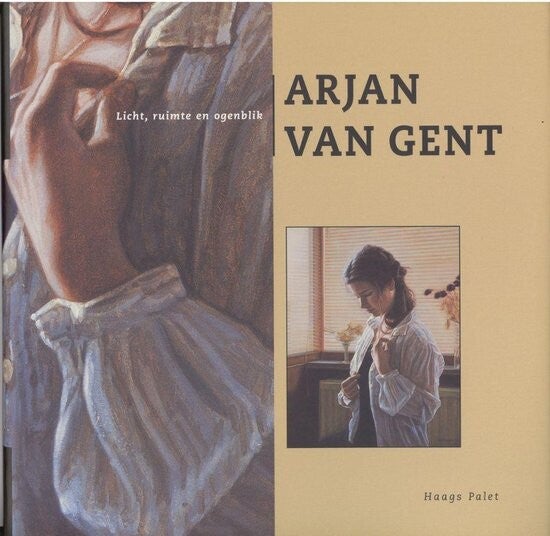
People sometimes joke that Van Gent is not a bad surname to have, considering Van Gogh. When my first book was published in 2000, it was displayed not only on a table in what is now the Kunstmuseum Den Haag, but also placed in the museum bookshop. Alphabetically, it stood right next to a book about Van Gogh. A small detail perhaps, but one that has always stayed with me.
During my conversation with Carlos Alomar, he asked about the urgency behind my book Holding Bowie. Without hesitation, I answered that the main reason was my father. Only after saying it aloud did I realise how true that was.
My father named me after his own father: Theodorus. The same name as Vincent’s brother Theo. He did so, incidentally, without informing my mother beforehand. She was, to put it mildly, not particularly pleased about that and jokingly called him sneaky -and therefore, in her view, a true Catholic. These days I can laugh about it, and Carlos found the story hilarious as well.
The only paintings I ever saw my father make were clearly inspired by Van Gogh. The same was true of the sketches he produced during my workshops in Italy, which I had the privilege to witness.
Standing once again in front of Van Gogh’s work yesterday, in the very same museum where my first book had once stood beside a book about him, gave me the feeling that some connections in life only reveal themselves much later.
And now that I have written all of this down, I find myself wondering how many traces of Vincent I have unknowingly passed throughout the years.
Perhaps it is finally time to download that Van Gogh walking route after all… 😉
Add comment
Comments